
Deep Dives
Comprehensive research into individual supplements and mechanisms. Every claim evidence-graded.

Post-Workout Supplements: What Helps You Recover Faster
You just finished a workout. In front of you sits a row of tubs: fish oil, whey, creatine, BCAAs, glutamine, tart cherry. Maybe you take a few already, maybe you're just tired of guessing. The real question is simple. Which post-workout supplements help you recover, and which are you buying out of
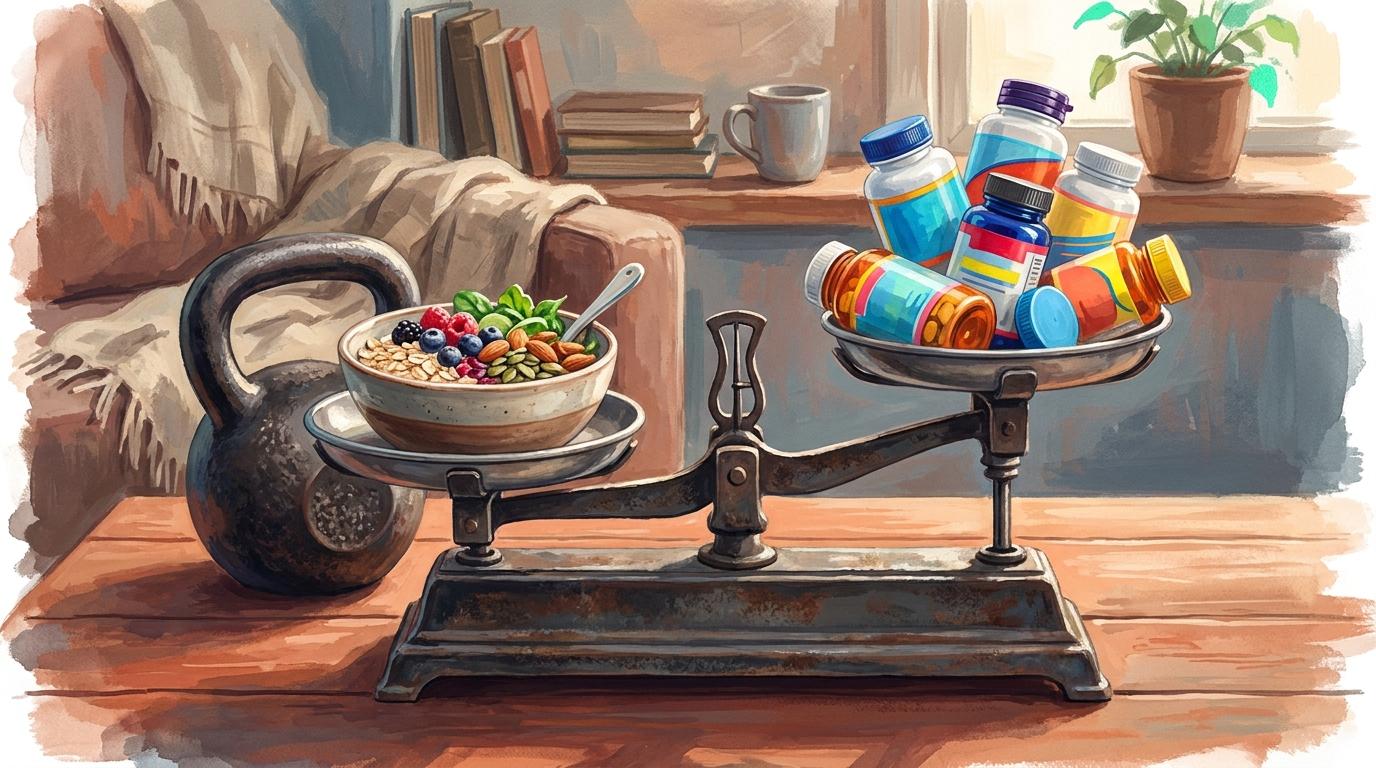
Do Post-Workout Supplements Help Women Lose Weight?
You're eyeing the fat-burner aisle, wondering if any of these post-workout supplements help women lose weight.

Supplements for Women in Their 30s: A Short, Tested List
You've probably typed something like "best supplements for women in their 30s" into a search bar, then closed the tab. The results all push fifteen bottles, every one of them "essential." That's not a routine. That's a shopping list someone else profits from.

Glycine for Sleep: Does the Cheap Amino Acid Work?
You may have seen glycine recommended as the sleep aid that costs about ten cents a night. Maybe a late-night thread talked you into trying it, and you still can't tell if it did anything. Either way, glycine for sleep keeps coming up. The pitch is easy to like. It's cheap. It's an amino acid, one

Best Supplements for Energy: Test Before You Buy Them
You're tired in a way coffee stopped fixing a while ago. Maybe you've tried a B-complex, or a magnesium that did nothing. Maybe you're just standing in front of a wall of bottles with no idea where to start. Either way, one thought keeps nagging: your bloodwork came back normal, so why do you still

GlyNAC Benefits: Who the Evidence Does and Doesn't Back
You've probably seen the headline that GlyNAC turns 80-year-olds into 20-year-olds. Or maybe you're hearing the name for the first time. GlyNAC's benefits are well-documented and unusually wide-ranging, but they show up almost entirely in adults over 60 and people managing a chronic condition. The
Rhodiola Rosea Benefits, Dosage, and What's Oversold
Whether you've already tried rhodiola rosea or you're just eyeing the bottle, the same problem trips people up. It's sold for energy, focus, mood, stress, even sleep. But the evidence only piles up in one place. A Reddit thread or a Huberman clip can make it sound like it fixes everything.

Supplements for Perimenopause: What Works by Symptom
You're looking at supplements for perimenopause, and every bottle promises to "balance your hormones" or melt belly fat in one capsule. Maybe you've tried one and felt nothing. Maybe you're just tired of guessing which claim is honest.

The Best Supplement Stack Is Simpler Than You Think
You've got a corner of the counter colonised by supplement bottles, and you suspect half of them do nothing. Or maybe you haven't bought any yet, and the 20-item lists online just make you want to close the tab.
Magnesium for Sleep: Which Form Has the Best Evidence
You've seen "Magnesium 500 mg" on the front of a bottle. Two different forms can both say 500 mg and deliver wildly different amounts of the part your body absorbs. That's the gap between people who say magnesium worked and people who say it did nothing.

Supplements for Brain Fog, Focus, and ADHD: What Works When Your Doctor Has No Answers
You've seen the posts. L-theanine plus caffeine is "the stack that works." Omega-3 is "proven for ADHD." Lion's Mane "grows new brain cells."

Creatine for Women: What It Actually Does for Your Brain, Muscles, and Hormones
Most of what you've heard about creatine was written for men in a gym. The doses on the label assume you weigh 90 kg. The protocols were designed for athletes chasing maximum muscle in minimum time. None of that is your life. And the science that matters for you doesn't live in a weight room.