
Supplements for Brain Fog, Focus, and ADHD: What Works When Your Doctor Has No Answers
You've seen the posts. L-theanine plus caffeine is "the stack that works." Omega-3 is "proven for ADHD." Lion's Mane "grows new brain cells."
But when you try these supplements for brain fog, the results are all over the place. Some days you feel sharper. Other days nothing. And when you ask your doctor, you get a shrug.
This article is for everyone who's tired of contradictory advice. Here's the honest hierarchy: two supplements have evidence strong enough to consider. Two are promising but thin. One is mostly hype. And none of them replace standard treatment.
What the internet gets right (and wrong)
Reddit's r/Nootropics community praises L-theanine with caffeine as the go-to for clean focus without jitters. Parents in r/ADHD frequently report behavioral improvements in their kids after starting omega-3. Lion's Mane gets enthusiastic reviews for "mental clarity" and "neurogenesis (growing new brain cells)."
Some of this aligns with research. Some doesn't. The community is right that L-theanine plus caffeine helps acute focus for many people. They're right that omega-3 has some evidence for ADHD. And they're right that low B12 is underrecognized. But they're wrong about three critical things.
Community claim: "Natural supplements can replace ADHD medication."
What the evidence says: No supplement here has evidence strong enough to replace standard treatment. At best, they're adjuncts. The frustration you feel when supplements "don't work" often comes from expecting medication-level effects. These supplements were only ever meant to help at the margins.
The other two misconceptions: Lion's Mane doesn't "grow new brain cells" in humans. Preclinical studies suggest nerve growth factor stimulation, but human neurogenesis evidence is indirect. And more omega-3 isn't always better. Dosing follows an inverted U-curve. The evidence supports a moderate daily amount of EPA plus DHA. Not "as much as you can swallow."

Confused about which supplements match your actual situation? Tell Your Supp' Buddy what you're already taking. It'll flag the ones worth keeping and the ones you can skip.
How these supplements for brain fog work
Here's what each one is doing in your brain. No jargon. Just the mechanism in plain language.
L-theanine crosses the blood-brain barrier and increases alpha brain wave activity — the same state you hit during meditation: awake, but calm. The result is focused calm without sedation.
Lion's Mane contains compounds that stimulate nerve growth factor synthesis. Think of NGF as fertilizer for neurons. The human evidence comes from studies in older adults with mild cognitive impairment, not from people with brain fog or ADHD.
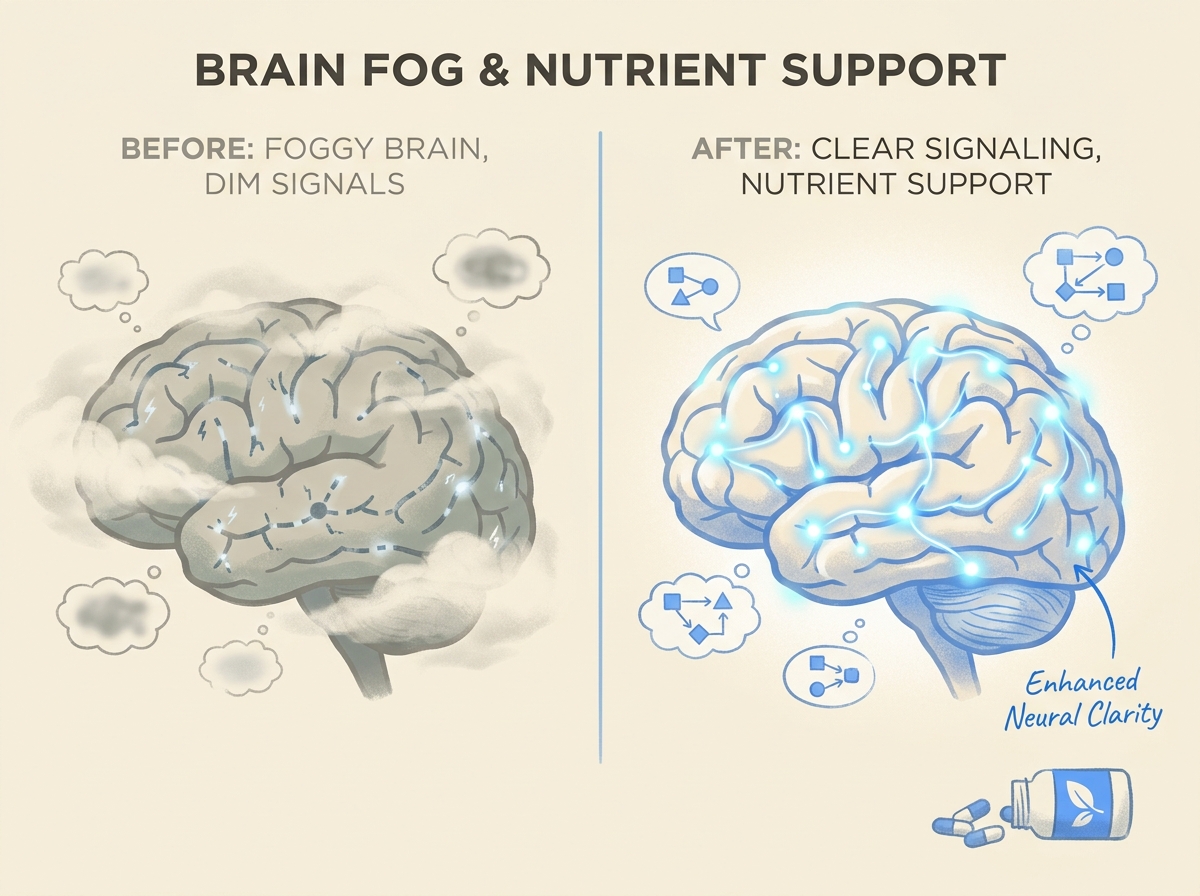
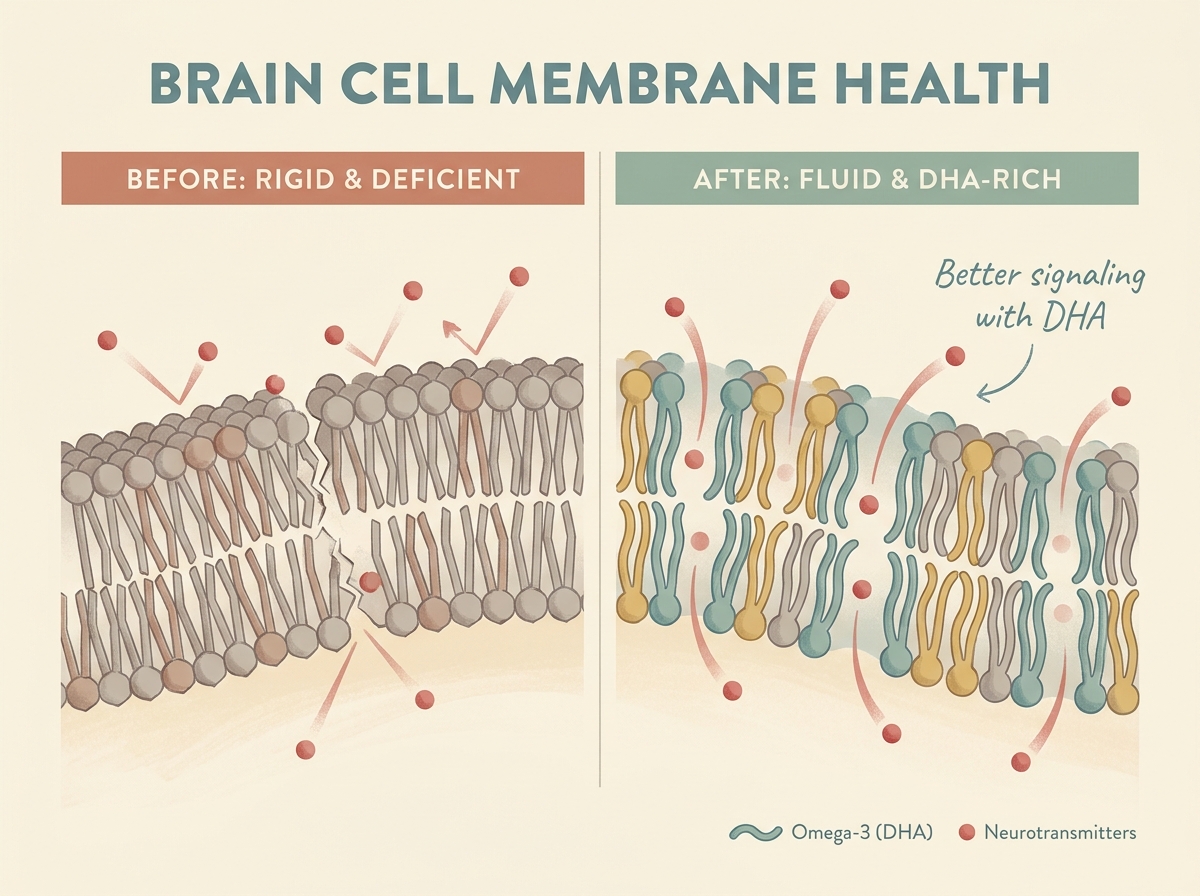
Omega-3 fatty acids, specifically EPA and DHA, are structural components of neuronal membranes. DHA is concentrated in your brain and retina. EPA has anti-inflammatory properties. Together they influence how brain cells signal each other.
Magnesium helps regulate the brain's excitation-inhibition balance. If you've ever felt wired and tired at the same time, this balance might be off. It's a cofactor for over 300 enzymatic reactions. Low levels have been linked to hyperactivity and attention problems.
Vitamin B12 is essential for myelin synthesis and neurotransmitter production. Low B12 causes demyelination — it strips the insulation off your nerves. It also produces neuropsychiatric symptoms including cognitive impairment and brain fog.
Not sure about timing or interactions with your current meds? Ask Your Supp' Buddy which supplements are safe with what you take. It'll flag any conflicts and suggest a schedule that works.
What supplements for brain fog show in the evidence
Here's where we get honest about what the research says. Not what the headlines claim. The evidence.
Magnesium: The deficiency angle
You've seen the honest grades for the top contenders. Now for the supplement that gets special treatment despite weaker evidence.
Magnesium scores a C for attention and brain fog. That's honest. The evidence is one small RCT of 40 children showing benefit when magnesium was combined with vitamin B65. That's it.
So why even mention it? Because low magnesium is one of the most common correctable causes of brain fog. The C grade is for "magnesium as a focus supplement." The A-grade recommendation is to test your levels before you buy a bottle.
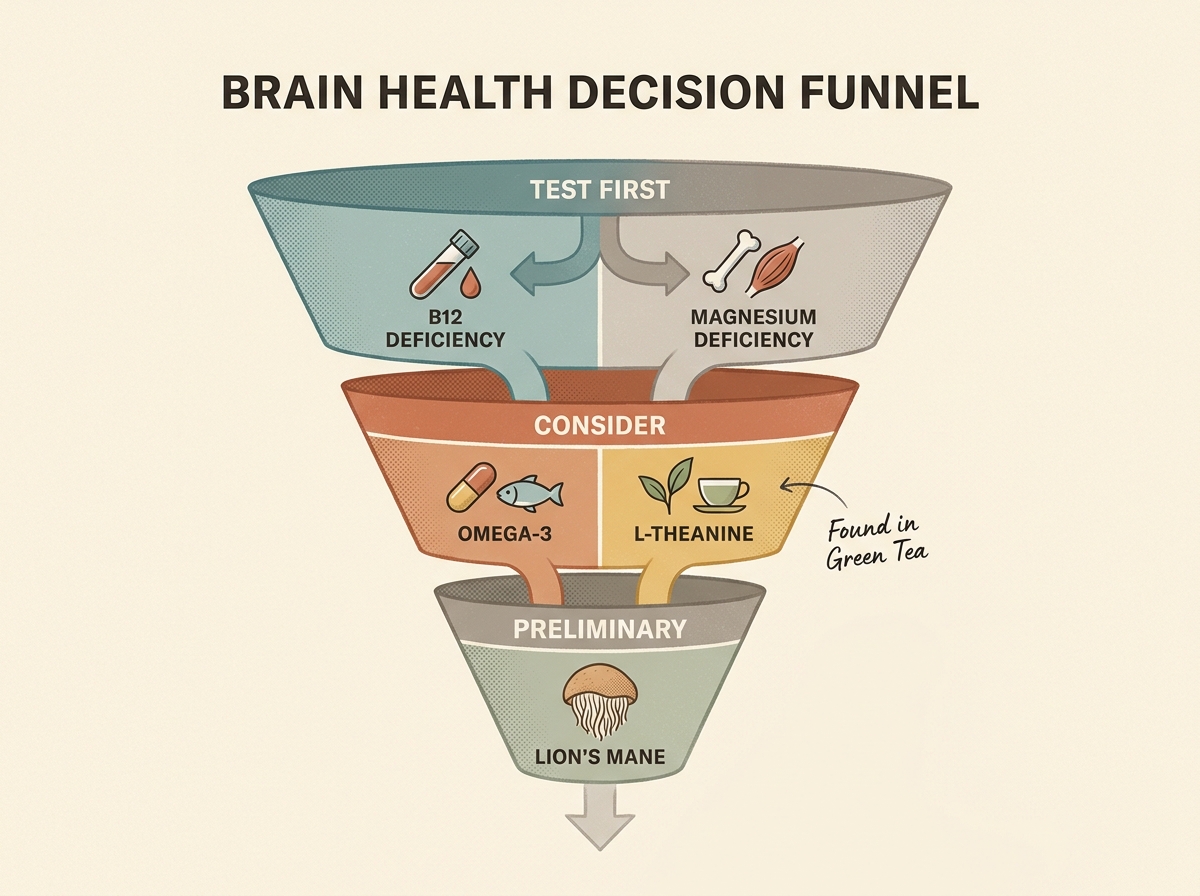
Most people taking magnesium for focus haven't tested their levels. If your levels are low, which is common with poor diet, chronic stress, or certain medications, correcting it can improve attention, sleep, and stress resilience. If your levels are fine, adding more magnesium won't sharpen your focus. It'll just give you expensive urine.
How to take these
Here's the practical breakdown. Doses, timing, forms, and how long to give each one before deciding if it works.
| Supplement | Form | Dose | Timing | Duration | Notes |
|---|---|---|---|---|---|
| L-theanine | Free-form or Suntheanine | 100-400 mg | Morning or divided | 4-8 weeks | Effects felt within an hour. Studies tracked daily use for 4-8 weeks. Combine with caffeine for enhanced focus |
| Lion's Mane | Fruiting body extract (30%+ polysaccharides) | 500-3000 mg | Morning | 8-16 weeks | Look for 30%+ polysaccharides; fruiting body extract preferred over mycelium |
| Omega-3 (EPA+DHA) | Triglyceride or ethyl ester | 1-2 g/day | With meals | 12-16 weeks | EPA-dominant formulas may be better for mood; DHA for cognition |
| Magnesium | Glycinate or citrate | 200-400 mg elemental | Evening | 8-12 weeks | Start with glycinate for best tolerance; citrate can cause laxative effects in sensitive individuals |
| Vitamin B12 | Methylcobalamin or cyanocobalamin | 500-1000 mcg | Morning | 4-12 weeks | Test levels first; methylcobalamin is active form but cyanocobalamin is well-studied |
Not all forms are equal. Magnesium glycinate is best tolerated. Citrate has good bioavailability but can cause diarrhea. Oxide is cheap but poorly absorbed. For B12, methylcobalamin is the active form but cyanocobalamin has more human trials behind it. For omega-3, triglyceride form may absorb slightly better than ethyl ester, but both work.
No studies have tested these five supplements together. The evidence covers each one individually. If you're considering multiple supplements, start with one, give it 8-12 weeks, then decide before adding another. That way you'll know what's helping.
Safety: What to know before you start
Just because these are available without a prescription doesn't mean they're free from side effects or interactions. Talk to your doctor before starting any supplement, especially if you take ADHD medication, SSRIs, or other prescriptions.
L-theanine at 100-400 mg is well tolerated by most people. Most clinicians recommend avoiding it during pregnancy and breastfeeding due to limited data. Use caution with children.
Lion's Mane can cause mild stomach upset in some people. Avoid it if you have mushroom allergies. Theoretical concern about anticoagulant interactions exists, but human data is limited.
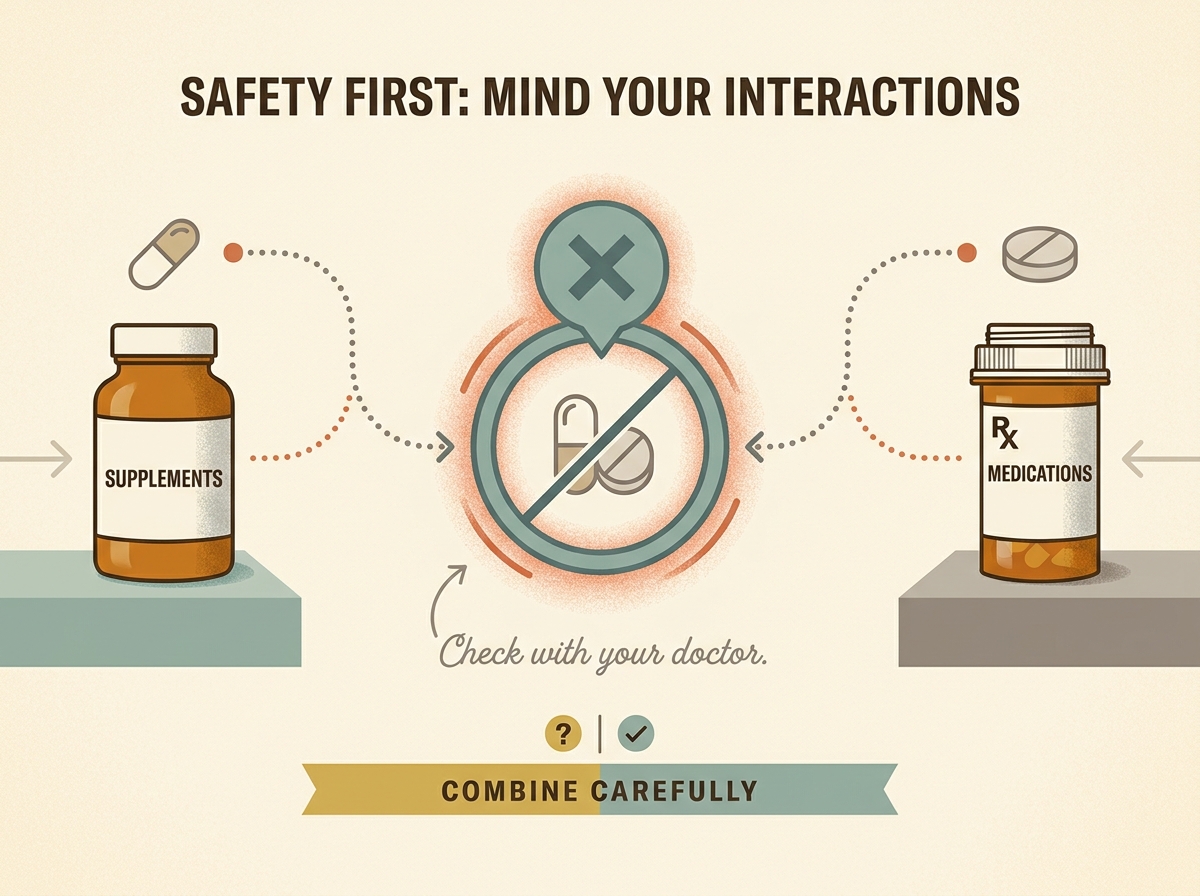
Omega-3 at 1-2 grams is safe for most people. That's well below the 3-gram threshold where bleeding risk becomes a concern. Use caution if you're on warfarin or aspirin. Choose molecularly distilled products to minimize contaminants.
Magnesium causes diarrhea at high doses, especially the oxide form. The glycinate form is best tolerated. Citrate can cause laxative effects in sensitive individuals, so start on the lower end. It can interact with antibiotics (tetracyclines, fluoroquinolones) and bisphosphonates. Avoid it if you have severe kidney disease. Separate from thyroid medication by at least 4 hours.
Vitamin B12 has no established upper limit and is very safe. But metformin reduces B12 absorption. If you're on metformin, get your levels checked. Proton pump inhibitors also reduce absorption. And recreational nitrous oxide inactivates B12, which can cause neurological damage with heavy use.
Where this stack lands across the 8 pillars
For a thinking stack, the standout scores are Focus (72) and Stress (60). Recovery, Longevity, and Immunity scores are lower. This is built for mental clarity, not physical performance.
Important caveat: No studies have tested these five supplements together. These scores reflect the combined theoretical potential of each ingredient's individual evidence. They are not empirical measurements of the stack itself.
The bottom line
The supplement aisle promises clarity in a bottle. The evidence promises less. Only two supplements have solid evidence: omega-3 at modest doses and vitamin B12 if your levels are low. Everything else is preliminary.
Start with testing. Check B12 and magnesium levels first. If either is low, correcting it is the move that pays off most. If both are normal, consider omega-3 at 1-2 grams. Everything else is optional. The skill that matters isn't finding the perfect stack. It's knowing which claims hold up and which are marketing.